Why Your Iqama Profession Holds More Power Than You Think
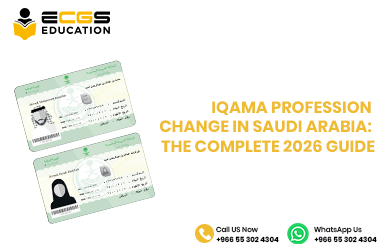
Your Iqama isn’t just an ID card. The profession (mahna) printed on it quietly decides a huge part of your life in Saudi Arabia — the jobs you’re allowed to do, the salary bracket employers can offer you, your eligibility for family visas, and even how smoothly you move through government services.
So when your Iqama says “Worker” but your university says “Engineer,” that gap is costing you. The single document that closes it? A properly attested degree certificate.
This guide walks you through the whole thing in plain language: what attestation is, why Saudi Arabia requires it for skilled-profession changes, the exact steps, and how to avoid the mistakes that get applications rejected.
What “Degree Attestation” Actually Means (No Jargon)
Attestation is simply official proof that your degree is real. A chain of authorities stamps and signs your certificate so the Saudi government can trust it without contacting your university directly.
Think of it like a passport for your diploma. Your degree can’t “travel” into the Saudi system and be accepted for a profession change until it carries the right stamps.
For skilled professions — engineer, accountant, IT specialist, nurse, teacher, technician — Saudi Arabia will not approve a profession change on your Iqama unless your degree is attested. No attested degree, no upgrade.
Who Needs This? (Quick Self-Check)
You need attested-degree-based profession change if:
- Your Iqama lists a generic or lower title (worker, labourer, helper, driver) but you hold a real diploma or degree.
- You want to move into a skilled or technical profession that legally requires qualifications.
- You’re aiming for a role that affects salary, family sponsorship, or professional licensing (e.g., Saudi Council of Engineers registration).
You probably don’t need it if you’re switching between two basic, non-skilled professions — but even then, an attested degree future-proofs your file.
The Real-World Payoff: What Changes When Your Title Changes
This is the part most people underestimate. Updating your profession isn’t paperwork for paperwork’s sake. Here’s what it unlocks:
- Higher legitimate salary bands. Employers can formally pay you as a professional, not a general worker.
- Career mobility. You can apply for — and legally hold — jobs that match your qualifications.
- Family peace of mind. Many family-visa and dependent-related processes are smoother under a skilled profession.
- Professional registration. Fields like engineering and healthcare require your real title before you can register with the relevant Saudi council.
- Dignity and recognition. Your Iqama finally says who you actually are.
Bottom line: Attestation is a one-time effort that pays back every single month you stay in the Kingdom.
Step-by-Step: How to Get Your Degree Attested for Saudi Arabia
The exact chain depends on your home country, but the structure is almost always the same four stages. Start early — this is the step that takes the most time.
Step 1 — Verify at the Source (University / Education Board)
Your university or education authority confirms the certificate is genuine. Some Saudi-bound applications require this verification first.
Step 2 — Home-Country Government Attestation
Your country’s authentication body stamps the degree:
- In many countries this is the Ministry of Foreign Affairs (MOFA) or equivalent.
- Some countries route it through state/HRD or apostille offices first.
Step 3 — Saudi Embassy / Consulate Attestation
The Saudi embassy in your home country attests the document, confirming it’s valid for use inside the Kingdom.
Step 4 — Attestation Inside Saudi Arabia (MOFA Saudi)
Once you’re in the Kingdom, the Saudi Ministry of Foreign Affairs provides final attestation, making the degree ready to submit for your profession change.
Step 5 — Submit the Profession Change (Qiwa)
With the attested degree in hand, the profession change is filed — usually online through the Qiwa platform by your employer. The government fee is around 1,000 SAR, typically paid by the employer.
Heads-up: For engineer or doctor titles, an attested degree alone isn’t enough — you’ll also need registration with the Saudi Council of Engineers or the relevant health authority.
The 5 Mistakes That Get Attestation Rejected
Save yourself weeks of delay:
- Skipping a stage in the chain. Each stamp depends on the one before it. Miss one, start over.
- Name mismatches. The name on your degree, passport, and Iqama must match. Even a middle-name difference can stall you.
- Translation errors. Documents often need certified Arabic translation. A sloppy translation gets bounced.
- Expired or unclear scans. Faded stamps and low-quality copies cause rejections at Qiwa.
- Choosing a “Saudized” profession. Some roles (e.g., HR, security) are reserved for Saudi nationals — you can’t switch into them no matter what your degree says.
DIY or Use a Service? An Honest Comparison
Doing it yourself is possible — but the chain crosses two or more countries, multiple government desks, and tight document rules. One wrong stamp and you’re mailing certificates across borders again.
A professional attestation service handles the chain end to end: source verification, government attestation, embassy attestation, certified translation, and Qiwa-ready packaging — so your file is right the first time.